Working at Cognite A/S, I led development of a web-based economic analysis tool for evaluating carbon capture project viability. The end customer was a major energy company exploring carbon capture as a service. Engineers and economists used the tool to define capture projects with detailed technical and economic parameters, then compute the Levelized Cost of CO2 (LCO), which is the minimum price per ton of captured CO2 that makes a project break even on net present value.
I built the application shell: Django backend, data models, the input form system, Plotly Dash visualizations, CDF integration, and deployment to the existing Kubernetes infrastructure. The calculations engine (the actual financial math: NPV, IRR, LCO via scipy root-finding) was built by subject matter experts on the team. A clean serialization layer between my code and theirs meant neither side needed to know about the other’s internals.
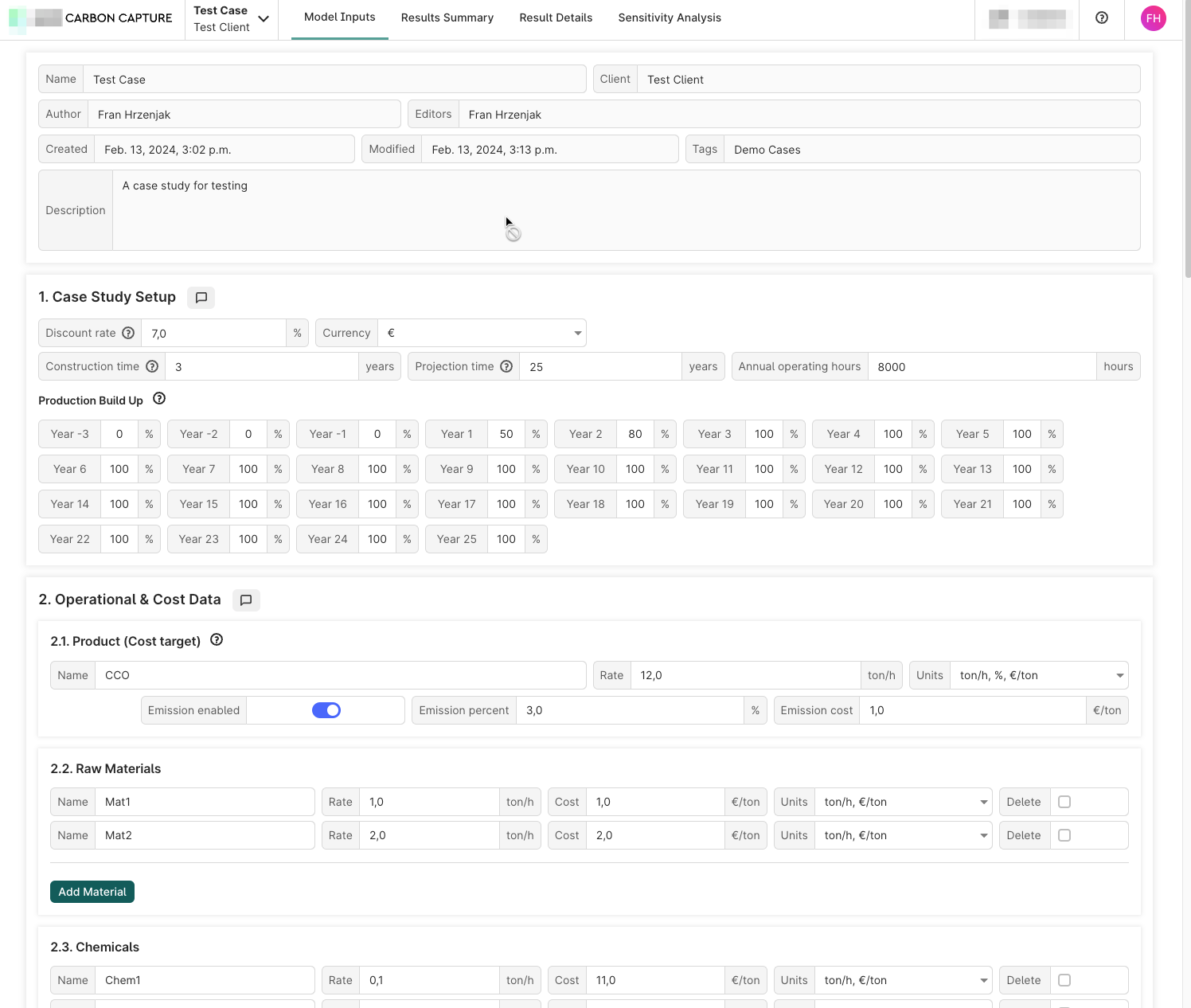
The input side was the most complex UI work. Case studies have dozens of parameters across multiple categories: construction timelines, production ramp-up profiles, raw materials, chemicals, utilities, labor, CO2 transport and storage costs, capital expenditure line items, and more. All built as dynamic Django forms with inline formsets for variable-length data, validation on save (if the calculation fails, the case study is saved as draft with an error message so the user can fix and retry).
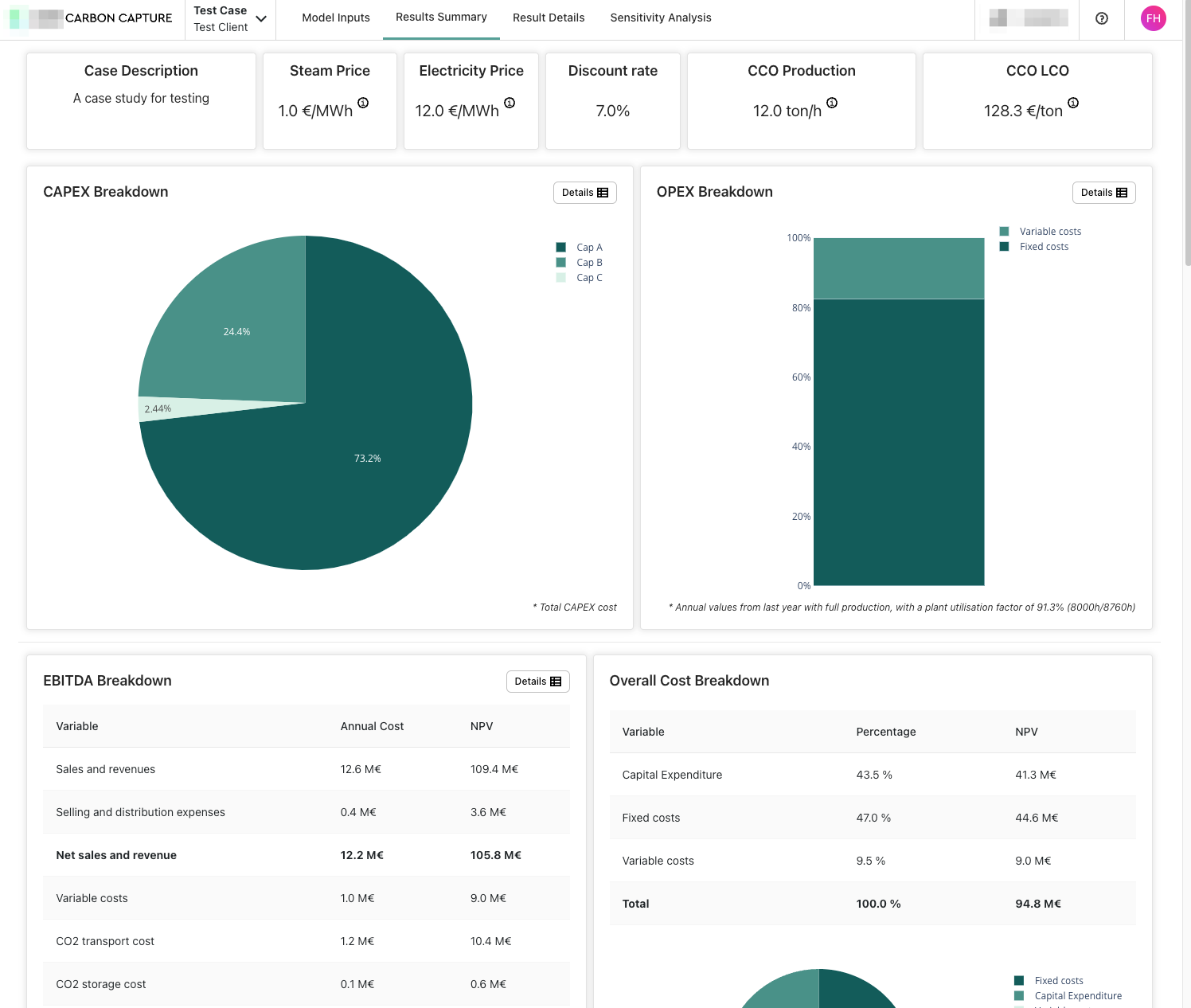
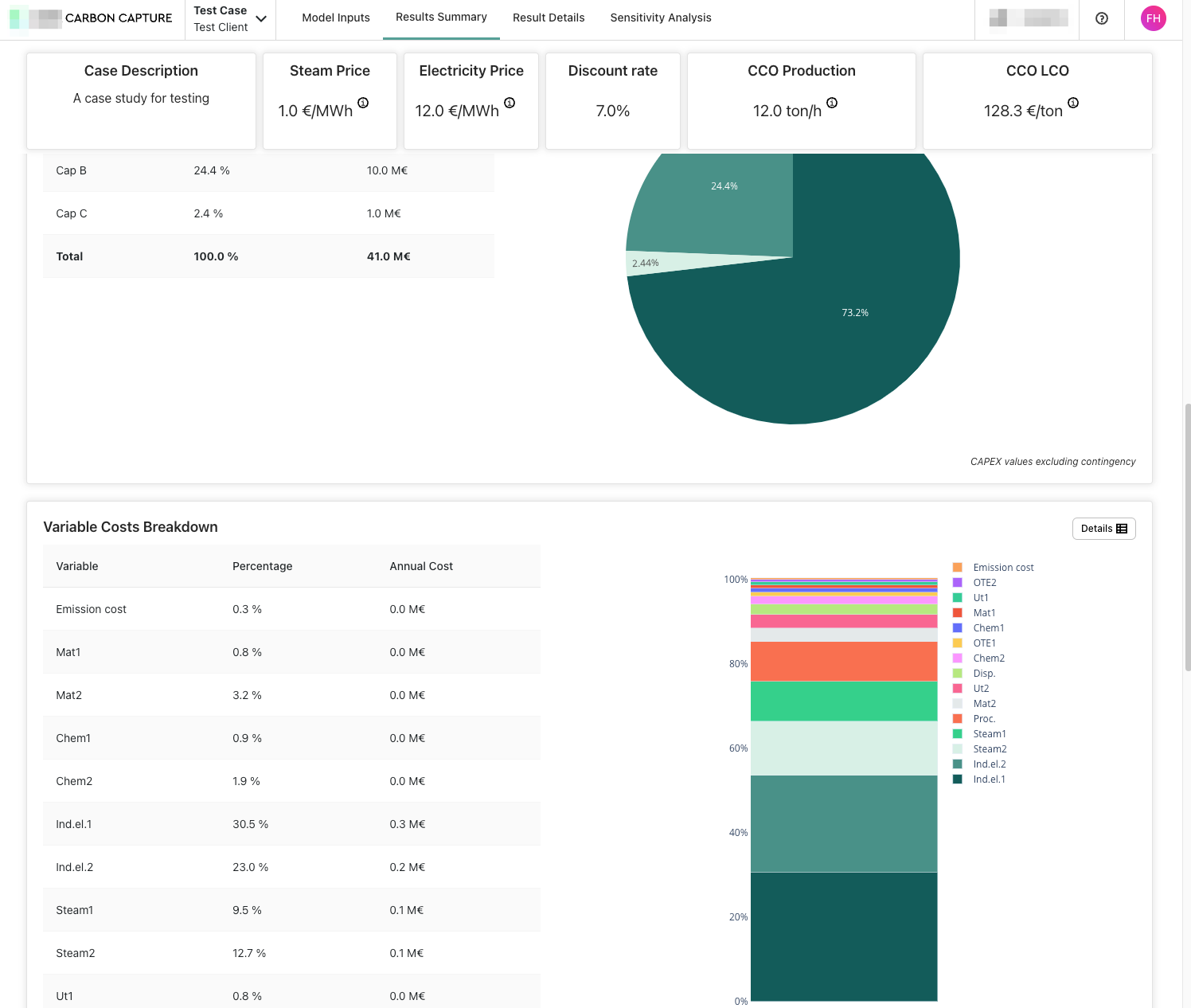
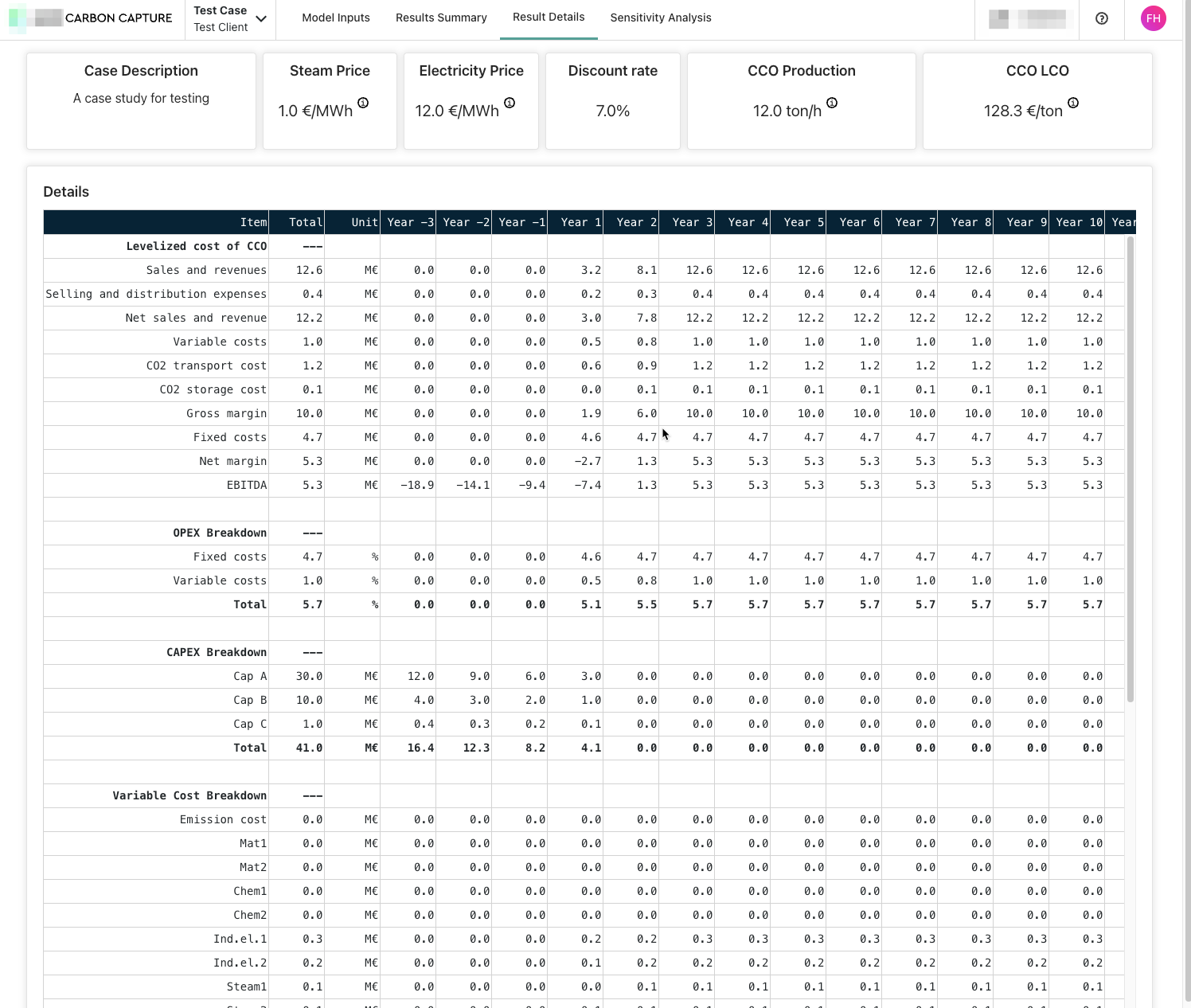
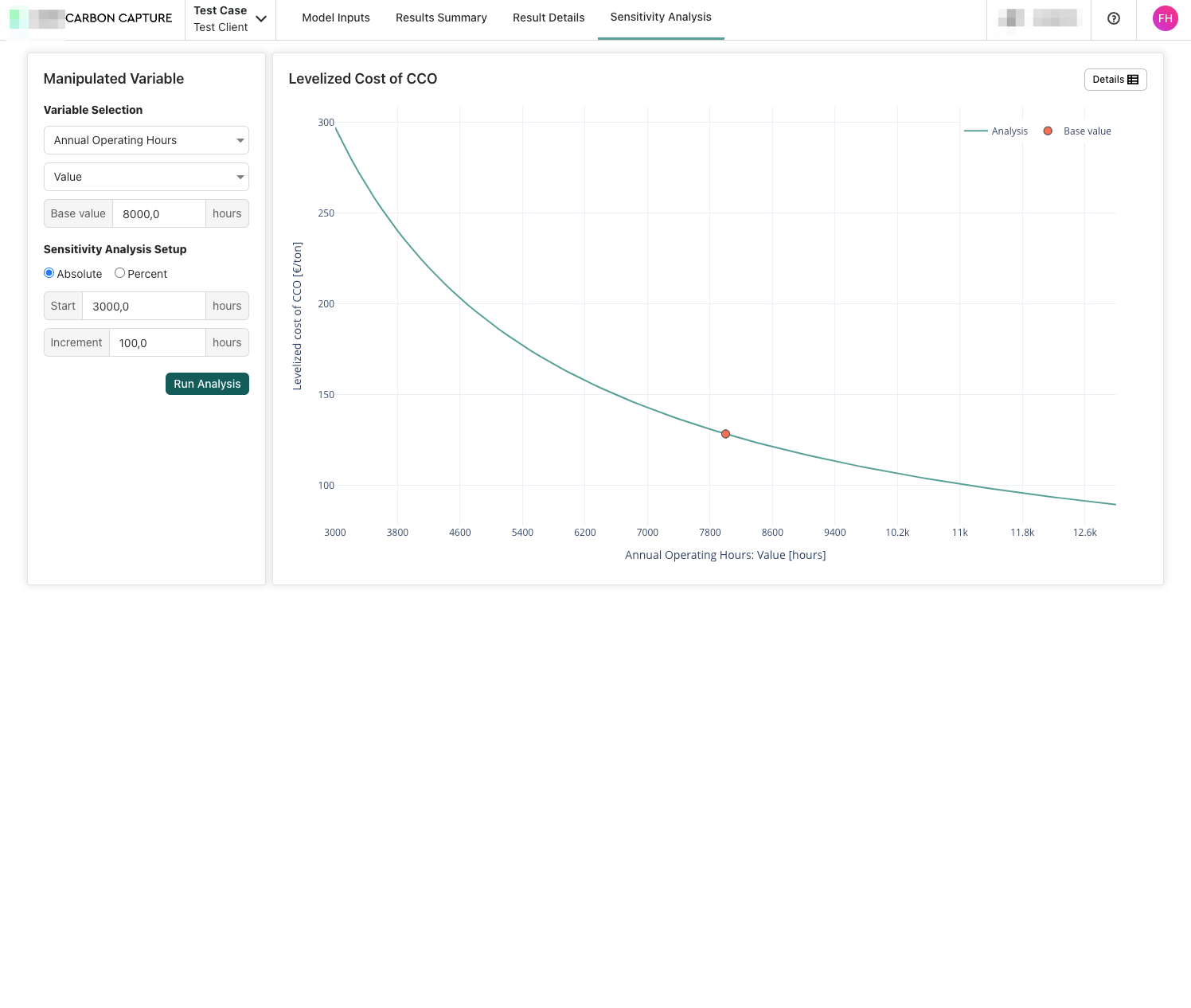
The output side has three views built as Dash apps. A summary page with KPI boxes and breakdown charts (CAPEX, OPEX, EBITDA, overall cost composition). A details page with a full annual breakdown table across the project lifetime. And a sensitivity analysis page where users pick input variables to vary, define ranges, and see how each one affects the levelized cost.
Each save creates a versioned snapshot in Cognite Data Fusion, providing an audit trail and enterprise data lake integration. The app runs on Kubernetes (GKE) with rolling updates, Prometheus monitoring, a 99.5% SLO availability target, and Azure AD authentication.
Small team, at most three developers at a time: me as lead, a subject matter expert on the calculations side, and a junior developer on frontend. Developed between 2021 and 2022, the tool went into production afterwards, used for evaluating real carbon capture investments.